 Log In
 Register


 Topic RSS
 Facebook
 Twitter
 Email this
8:39 am
October 27, 2013
 Offline


zgic said
But we also have to look at the current asset values. As Buffet said, if you feel like it is getting to a point of a casino, the asset valuations are insane, he cannot find anything to buy, his cash position is very high.
You cannot time the market, that is true, but you need to have some idea of the security valuations to see if it is fully valued, over valued etc to make better returns.
Yes, and that is a fair comment. One may wish to have a higher than normal cash component at this time though to be fair, no one knows whether today's valuations will be 10% or 20% higher a year from now, 20% lower, or twice that 5 years from now. As Mordko said, large numbers of investors miss out long term by waiting for that valuation decline that does not come for years. What we do know is stock market indices will be higher long term. The trend is ALWAYS to the northeast because that is how the global economy works to generate GDP growth. There is no alternative.
If one is a long term investor, today's valuations do not really matter. It will all come out in the wash over longer periods of time as stock market charts over 10+ years show. The key is 'staying the course'. That is what equity market critics fail to want to understand.
8:47 am
May 15, 2007
Offline
Personally, I struggle with the psychology of it: markets seem to be regularly at or near all-time highs. We can look at the statistics all we want but our brains and emotions cannot always process that rationally. I wish I was more like a robot when it comes to investing, but I have failed in this effort.
Every time the market goes up, I wish I had invested more. Every time the market goes down, I kick myself for not waiting a bit longer.
The fortunate reality is that I rarely or never need to invest a large amount of my savings at once. So it helps when I am just investing small amounts every month or a few times a year.
When I have something closer to a lump sum, like when contributing to a TFSA or RRSP every year, it helps me to sleep at night if I spread it out and just invest it over a few months instead of all at once. Statistically over large amounts of time, should I have just invested the whole thing at once? Yes. But I don't enjoy doing all this market analysis, and I also gain some valuable time and sanity back by essentially "dollar cost averaging".
9:24 am
January 12, 2019
Offline
.
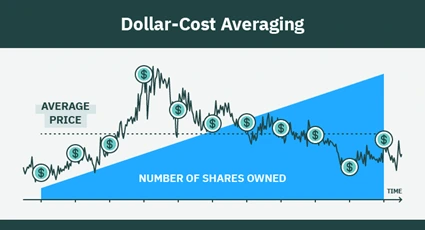
Peter ... That's ⬆️ a form/variation of 'DCA' !
- Dean
 " Live Long, Healthy ... And Prosper ! "
9:57 am
October 27, 2013
Offline
Peter said
Personally, I struggle with the psychology of it: markets seem to be regularly at or near all-time highs. We can look at the statistics all we want but our brains and emotions cannot always process that rationally. I wish I was more like a robot when it comes to investing, but I have failed in this effort.Every time the market goes up, I wish I had invested more. Every time the market goes down, I kick myself for not waiting a bit longer.
The fortunate reality is that I rarely or never need to invest a large amount of my savings at once. So it helps when I am just investing small amounts every month or a few times a year.
That is why it is important to know one's own personality and behaviour and to invest when and how accordingly. Know thyself. If one cannot handle the downs of the market despite the long term trend being up, then either stay away or have a third party professional advisor manage the portfolio instead. Retail investors are their own worst enemies. Not capital markets.
For those struggling, DCA is a way to do it. Even I did that some 13+ years ago when I sold a chunk of undeveloped land and had 6 digits to invest. I did not do it all lump sum, albeit in hindsight I would have been better off doing so.
Another key item most people do not consider is to develop an IPS (Investment Policy Statement) on high level investment strategies one can stick too through thick and thin. 1-2 pages maximum staying out of the weeds but setting boundary conditions and guiding principles. An IPS should not tweak much except for significant life changes, e.g. marriage or divorce, new stage in life's journey, etc. One resource for IPS is https://www.finiki.org/wiki/In....._statement
10:02 am
March 30, 2017
Offline
AltaRed said
That is an utterly ridiculous example. No one would invest in a singular country market exclusively. Why make a fool of yourself? FWIW, the Japanese market became a smaller and smaller portion of the MSCI World Index over that entire period which has done and continues to do very well despite global bear markets that have occurred at least 3 times
It’s a real life example, u blatantly choose to ignore it, sounds like u r the bigger fool here.
Ask how many Japanese who owned only Nikkei, and how many Canadians who don’t diversify back in the days.
Pl
10:06 am
March 30, 2017
Offline
Peter said
Personally, I struggle with the psychology of it: markets seem to be regularly at or near all-time highs. We can look at the statistics all we want but our brains and emotions cannot always process that rationally. I wish I was more like a robot when it comes to investing, but I have failed in this effort.Every time the market goes up, I wish I had invested more. Every time the market goes down, I kick myself for not waiting a bit longer.
The fortunate reality is that I rarely or never need to invest a large amount of my savings at once. So it helps when I am just investing small amounts every month or a few times a year.
When I have something closer to a lump sum, like when contributing to a TFSA or RRSP every year, it helps me to sleep at night if I spread it out and just invest it over a few months instead of all at once. Statistically over large amounts of time, should I have just invested the whole thing at once? Yes. But I don't enjoy doing all this market analysis, and I also gain some valuable time and sanity back by essentially "dollar cost averaging".
There is nothing wrong with ur approach, much better than blindly believing ‘high today = low tomorrow, market always go up and always make money’ mentality that some likes to convince others here.
10:27 am
October 27, 2013
Offline
Cherry picking specific historical examples is not helpful. It simply reinforces personal bias. Nor has anyone said the market always goes up. I have provided many times, historical market charts that show the bumps along the way.
It does not matter what a naive centric Japanese citizen might have done in 1989 (they are still nation centric on a lot of things for cultural reasons) or what a Canadian might have done before resources became readily available on the Internet post-2000 (or post-2010 if you prefer). It matters what could be done and has been done by the investing public on a larger scale for many years.
Most of us who have equity investment portfolios have understood for decades the importance of diversification and staying invested. The investing cohort I know in real life have been diversified across sectors and geographic regions for a long time. For myself since circa the mid-1980s. I've never had more than about 50% Canadian content and then only in the initial 10 years or so.
A 2024 white paper by Vanguard Canada indicates Canadians have moved from 67% Canadian content in 2012 to about 50% in 2024. https://www.newswire.ca/news-r.....39201.html
Circa 2010 is about when a lot more educational material started becoming available on the Internet, when DIY investing was become far more cost effective and easy, and when low cost ETFs started to become available in a flood as compared to high cost actively managed mutual funds.
I think we will continue to see a downward trend in Canadian content, not as low as 3% which is Canada's market capitalization share of global markets, but at some intermediate level. Vanguard Canada's work circa 2014 and then in a followup study some years later suggests 30% Canadian content is a sweet spot...representing Canadian consumption exposure overall. Blackrock and BMO use circa 25% instead as represented in their asset allocation ETFs. For what it is worth, these all-in-one asset allocation ETFs are seeing tremendous growth as more and more Canadians see the merit of these all-in-one solutions.
So, it does not matter what an 'unknowing' investor did pre-2000 (or pre-2010 if you prefer). It is what a 'knowing' investor does now given the vast array of solid independent information (not marketing materials) available on the Internet.
10:28 am
April 27, 2017
Offline
savemoresaveoften said
It’s a real life example, u blatantly choose to ignore it, sounds like u r the bigger fool here.
Ask how many Japanese who owned only Nikkei, and how many Canadians who don’t diversify back in the days.
Pl
So, it's the reason to diversify rather than to time the market. Ok.
10:30 am
April 27, 2017
Offline
savemoresaveoften said
There is nothing wrong with ur approach, much better than blindly believing ‘high today = low tomorrow, market always go up and always make money’ mentality that some likes to convince others here.
Not one person made this claim here but nice straw-man.
10:37 am
April 27, 2017
Offline
zgic said
But we also have to look at the current asset values. As Buffet said, if you feel like it is getting to a point of a casino, the asset valuations are insane, he cannot find anything to buy, his cash position is very high.
You cannot time the market, that is true, but you need to have some idea of the security valuations to see if it is fully valued, over valued etc to make better returns.
The problem is that valuations are based on expectations of future earnings, which are inherently uncertain. Without a crystal ball, we cannot know whether something is fairly valued, overvalued or undervalued. That becomes clear only years later, with the benefit of hindsight.
So, valuations are based on predictions which matter, but the market already incorporates the collective expectations of millions of investors. To consistently outperform by identifying mispriced assets or markets, you need to be better at predicting the future than the market as a whole. Buffett can say that but what are the chances that an average first time 70-something investor is the next Buffett?
And that’s precisely why using valuations to decide when to enter or exit the market is a form of market timing, even if you don’t call it that.
11:47 am
March 30, 2017
Offline
mordko said
The problem is that valuations are based on expectations of future earnings, which are inherently uncertain. Without a crystal ball, we cannot know whether something is fairly valued, overvalued or undervalued. That becomes clear only years later, with the benefit of hindsight.
So, valuations are based on predictions which matter, but the market already incorporates the collective expectations of millions of investors. To consistently outperform by identifying mispriced assets or markets, you need to be better at predicting the future than the market as a whole. Buffett can say that but what are the chances that an average first time 70-something investor is the next Buffett?
And that’s precisely why using valuations to decide when to enter or exit the market is a form of market timing, even if you don’t call it that.
Since valuation to you is also market timing, which you claim is faulty and the wrong approach, then how do you determine entry points ? If you don’t care about entry points, then you are effectively believing in market always go higher for you to even invest. And if you do care about entry points, I like to hear what it is, and has nothing to do some kind of timing.
12:06 pm
October 27, 2013
Offline
One invests when they have the funds to do so and to 'stay the course' for many years, if not decades. Entry points at a 'market index level' do not matter over the long term. Market valuations will go up and down over the years but index charts show the trend is to the northeast over periods of time. Many of us, like Peter, will DCA lump sums to avoid buyer's regret should markets go down shortly after a lump sum investment but he also understands that with the trend of the markets going up more than down, he is likely leaving something on the table. That is called the sleep-at-night factor.
Buffett is not a good example for a retail investor because he has a host of analysts to do the research and get inside management teams to make investments in specific companies. Retail investors overall do better with passive index investing (the whole market). SPIVA reports annually (and semi-annually) consistently report that active management after fees under perform the market as a whole.... or they should simply buy Berkshire stock to be part of Buffett's success.
12:12 pm
April 27, 2017
Offline
savemoresaveoften said
Since valuation to you is also market timing, which you claim is faulty and the wrong approach, then how do you determine entry points ? If you don’t care about entry points, then you are effectively believing in market always go higher for you to even invest. And if you do care about entry points, I like to hear what it is, and has nothing to do some kind of timing.
My entry point is simple: I invest when I have money available to invest, consistent with my asset allocation (currently 70/30). My lump sum goes in ASAP to max time in the market.
I don’t need to believe that markets always go higher. That’s an obvious logical fallacy. Obviously they don’t. I only need to believe that I can’t predict tomorrow’s pricing and that equities have positive expected returns over the long term. Otherwise I wouldn’t be investing in equities at all.
12:13 pm
August 30, 2023
 Online
Valuations absolutely matter.
I thought Microsoft was mispriced at 300 and got in, but at 500 might not be mispriced that much.
12:17 pm
April 27, 2017
Offline
zgic said
Valuations absolutely matter.
I thought Microsoft was mispriced at 300 and got in, but at 500 might not be mispriced that much.
You are now moving on to the subject of active investing. There is nothing wrong with trying to identify undervalued individual stocks. Whether you can consistently do so better than the market is another question.
12:22 pm
August 30, 2023
Online
mordko said
You are now moving on to the subject of active investing. There is nothing wrong with trying to identify undervalued individual stocks. Whether you can consistently do so better than the market is another question.
Overall it is kinda same topic. At age 70 how much money would you put in at S&P 8000 or at 6000 or 5000 would vary a lot.
12:28 pm
April 27, 2017
Offline
zgic said
Overall it is kinda same topic. At age 70 how much money would you put in at S&P 8000 or at 6000 or 5000 would vary a lot.
These are meaningless numbers.
12:41 pm
October 27, 2013
Offline
mordko said
These are meaningless numbers.
I agree those are meaningless numbers. At a minimum, they need to be associated with index P/E multiples (valuations). I can't imagine zgic actually made that comment.
The point at which the S&P is 8000 may have a P/E ratio of 15 while the S&P at 5000 years ago may have had a P/E multiple of 18 (a higher valuation).
It is hard to believe some here don't understand markets are about earnings, and more specifically expectations of forward earnings. Market valuation is the present value of those expected future earnings streams.
12:47 pm
October 27, 2013
Offline
This thread has long ago disassociated itself with the OP's original question. It remains unanswerable so far because no one knows how the proposed $50k investment fits in as a percentage with the rest of his/her invested portfolio, and what annuity income (CPP, OAS, DB pension) is as a percentage of overall income generation.
Nor do we know whether any proposed equity ETF should be income oriented, conservative blue chip dividend oriented, or something more growth and volatility oriented. The OP would need to come back and provide some clarification.
1:37 pm
August 30, 2023
Online
AltaRed said
I agree those are meaningless numbers. At a minimum, they need to be associated with index P/E multiples (valuations). I can't imagine zgic actually made that comment.
The point at which the S&P is 8000 may have a P/E ratio of 15 while the S&P at 5000 years ago may have had a P/E multiple of 18 (a higher valuation).
It is hard to believe some here don't understand markets are about earnings, and more specifically expectations of forward earnings. Market valuation is the present value of those expected future earnings streams.
@AltaRed: I was just trying to emphasize that valuations matter as
mordko said: "And that’s precisely why using valuations to decide when to enter or exit the market is a form of market timing, even if you don’t call it that"
S&P 8000 is just a number I used to mention about today's valuation of the US market (based on forward PE) and it is overvalued for someone to put a lot of money at this level, more so a new investor. Just AI theme is driving the valuation,
The whole market is a valuation game.
